
Separate the Greene County Property Value Types
Value labels crowd together in Greene County records. They are not interchangeable. Appraisal fields describe the county's valuation components, while assessed value applies Alabama's classification ratio and can shift with exemptions or current-use treatment. A recorded deed may state consideration, yet that figure reflects a single transaction.
| Value | What It Is | Where |
|---|---|---|
| Appraised value | County estimate before the class ratio | Revenue Commissioner and GIS appraisal fields |
| Assessed value | Appraised value multiplied by the applicable assessment ratio | Tax assessment account |
| Market value | An opinion of likely market worth at a stated date | County appraisal context or licensed appraisal |
| Last sale price | Evidence from a specific transfer when stated | Recorded deed or transfer record |
| Land and improvement | Separate components behind the total appraisal | GIS LAND_APPR and IMP_APPR fields |
Alabama Department of Revenue guidance sets the classes. Most property is Class II at 20 percent. Agricultural and forest land, single-family owner-occupied homes, and historic property fall under Class III at 10 percent, so confirm the actual class on the parcel before applying any ratio.
Read Greene County Appraisal Fields in the GIS Layer
The GreeneAL parcel layer publishes the appraisal fields. APPR_INIT, LAND_APPR, IMP_APPR, and TOTAL_APPR sit alongside parcel, account, owner, deed-reference, acreage, tax-district, and legal-description data. Those supporting fields confirm the right tract.
| GIS Field | Meaning in the Layer | Do Not Assume |
|---|---|---|
| LAND_APPR | Land appraisal component | That it is assessed value |
| IMP_APPR | Improvement appraisal component | That every building change is current |
| TOTAL_APPR | Total appraisal field | That it is the taxable base or sale price |
| APPR_INIT | Published appraisal-related field | A meaning beyond the county's documentation |
The official Greene parcel-layer schema lists each value field. Treat it as a field reference rather than an assessment notice.
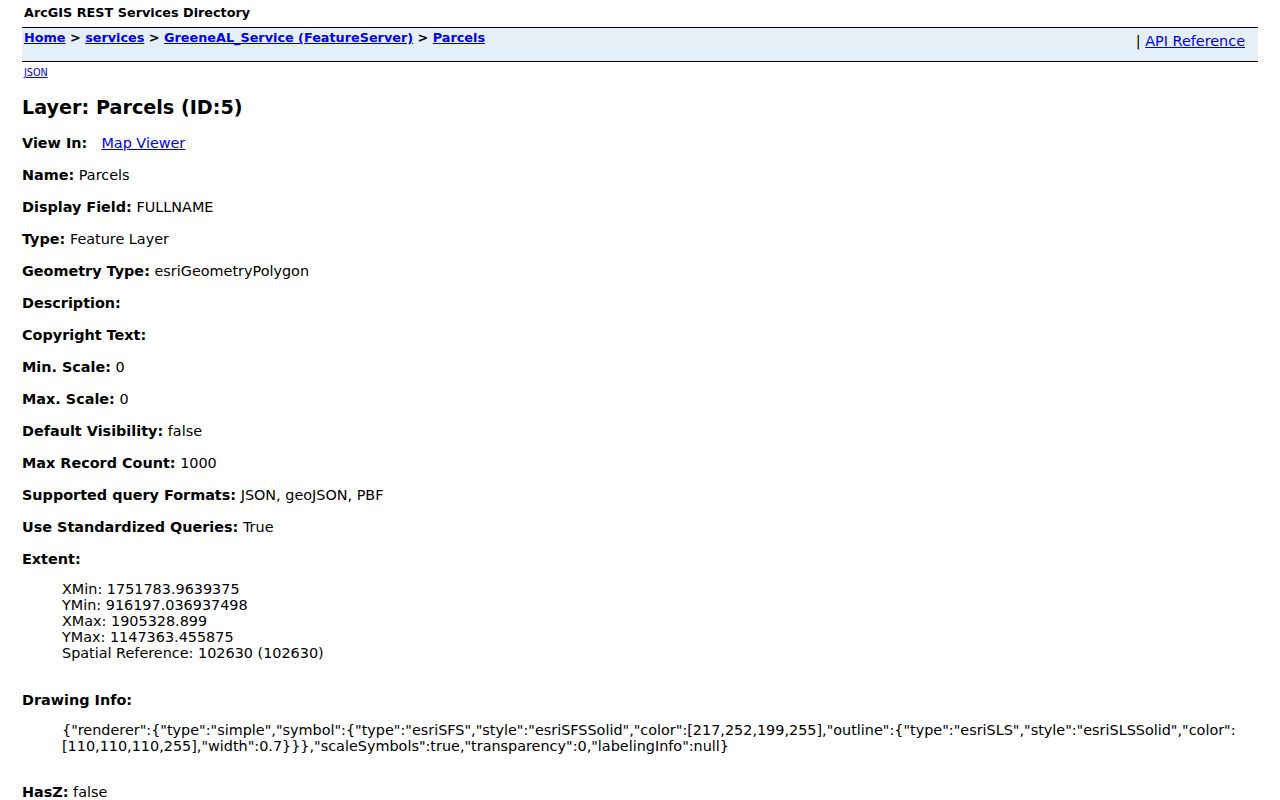
The schema prevents a common mix-up. Owners sometimes label total appraisal as assessed value. Confirm the tax-year assessment, class, and any exemptions with the Revenue Commissioner before relying on a figure.
Note: ArcGIS service timestamps are technical metadata, not proof of when an individual Greene County value was last reviewed.
Look Up a Greene County Assessed Value in Two Stages
Address lookups start most cleanly in Greene GIS. Its published search configuration accepts partial address matches. Munis instead takes an owner name or a seven-digit parcel ID, and it displays no published result columns. Preserve each identifier exactly when moving between the two.
- Find the address in Greene GIS and confirm its polygon, parcel ID, account number, and legal clues.
- Open Greene Munis Real Estate and search the confirmed tax identifier or owner.
- Record the roll year, property class, appraised value, assessed value, and exemption only if displayed.
- Use the latest matching deed as separate sale evidence when consideration is available.
- Appraised value
- The county's valuation before applying the property-class ratio.
- Assessed value
- The appraised value after the applicable Alabama classification ratio.
- Assessment ratio
- The percentage assigned by property class, not a discount from sale price.
- Consideration
- The amount or value stated in a transfer, when present, not a guaranteed market appraisal.
- Reappraisal
- The county process for reviewing value data over time.
Annual Reappraisal Does Not Date Every Greene County Value
Alabama requires counties to reappraise annually. The assessor reviews one-fourth of the county each year. Improvements found in that review are added for the next tax year. That pattern supports a four-year cycle. It does not prove when one Greene County parcel was inspected or when a particular sale reached the tax roll. Compare the tax year and source date first. The GIS service carries technical timestamps from 2025 and 2026, yet no county release explains whether they mark appraisal data, geometry edits, or another system update.
Greene County Assessed Value Depends on Classification
The Alabama property-tax assessment guide gives the formula. Appraised value multiplied by the classification rate equals assessed value. Class I utilities are assessed at 30 percent. Class II covers most property at 20 percent. Class III covers agricultural and forest property, single-family owner-occupied homes, and historic property at 10 percent, while Class IV private passenger vehicles sit at 15 percent. The parcel's actual class matters most. Current-use treatment and a valid homestead exemption can change the taxable figure as well. Do not infer either from a GIS land-use clue, a mailing address, or a historic designation.
The Alabama 7% Cap Changes Some Greene County Comparisons
Act 2024-344 caps certain year-over-year increases in taxable assessed value, with exceptions for improvements and specified changes involving use class or tax-increment financing. Improvements are one example. The cap is not market value. It still changes some comparisons, and the official ALDOR 7% cap page states every condition and exception.
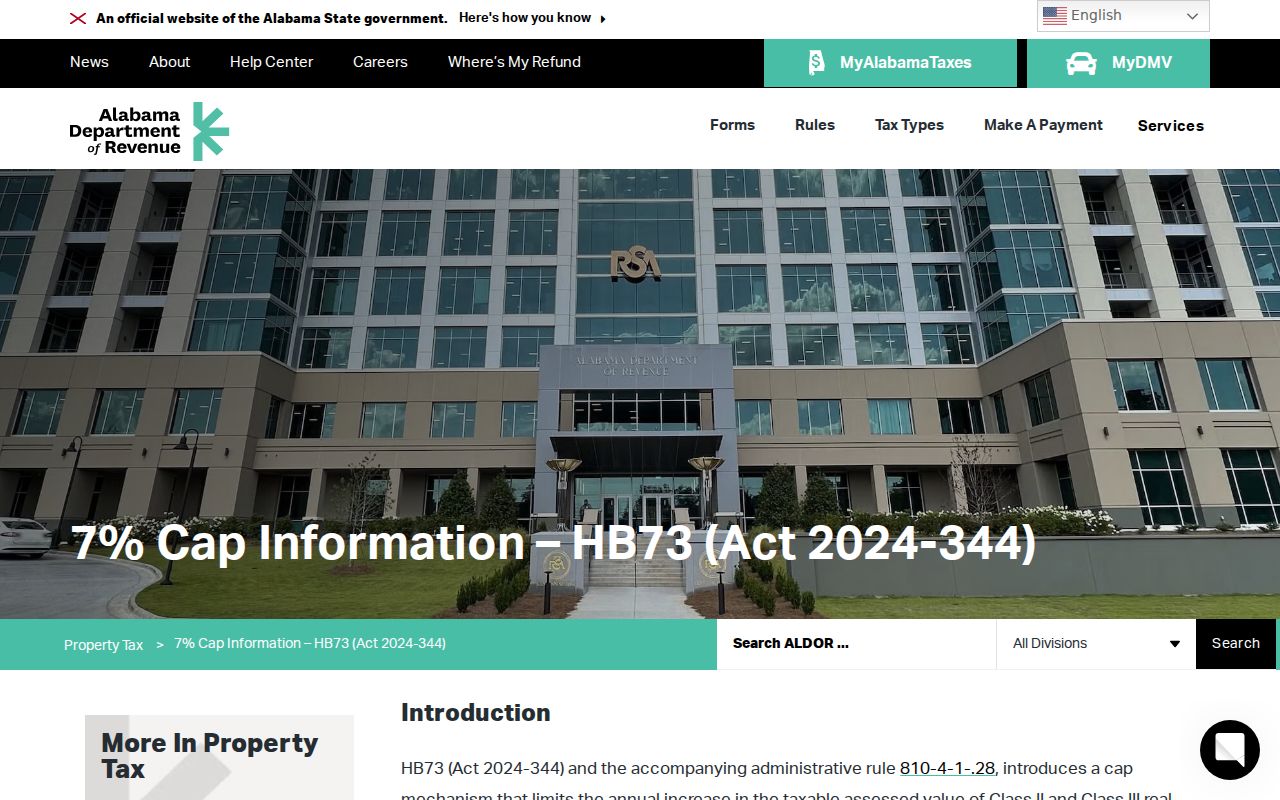
Confirm the parcel's appraised value, class, any changes, and its assessed-value history before applying cap rules. It offers no Greene County parcel calculation. Treat the cap as one input. Note: A capped increase affects taxable assessed value without saying what a buyer would pay.
Municipal Millage Does Not Redefine Greene County Property Value
The 2025 state schedule sets different municipal rates. Eutaw charges 17.5 mills. Boligee charges 3.5. Forkland and Union each sit at 5.0, and county, school, and district rates stack on top. Similar appraisals can still yield different tax bills. None of that millage changes what the property is worth on the open market. For the bill, due dates, exemptions, and the protest route, use the Greene County property tax records guide and confirm the current schedule with the Revenue Commissioner.
A Greene County Sale Is Evidence, Not an Automatic Appraisal
The latest matching deed may state consideration. That price is not proof of market value. A family transfer, estate deed, partial-interest conveyance, quitclaim, or transaction with unusual terms may not represent an open-market exchange. Read the actual instrument through ING Probate. Match its legal description before trusting the number. One price also lacks the date and condition analysis of a current appraisal, so treat it as a dated comparison point rather than a professional valuation. The GIS deed book, page, and date fields can lead to the instrument, but they are not the deed itself.
What a Greene County Property Value Cannot Establish
No assessor number settles everything. It cannot establish title, a legal boundary, building condition, a lien release, or a guaranteed sale price. Greene County GIS suits appraisal components and parcel context. Munis handles the tax account, ING holds the recorded deeds, and no single source answers every value question.
Value is not price. Greene County assessed value serves taxation. It is not a promise of what the property would sell for and is not a licensed appraisal.
A Greene County property value from tax rolls or property records carries real weight, but it cannot settle every question. For a sale, an estate, or a dispute, pin down the valuation date and purpose first, since a licensed appraiser can then analyze the parcel and the market data that fit that exact assignment.